Dear ’M’e: Letters toMom

Date
4 May 2026
Category
grief
Read Time
5 Mins
Twenty-five years ago, as a teenager, I lost my mother. Before and since then, I lost others and learned much about grief — its unpredictability, its ache, and sometimes, its insights. In the earliest days of my bereavement, seeing others navigate their own grief gave me hope that I, too, would one day find a way to move forward with what life had chosen for me. Dear 'M'e: Letters to Mom was created to offer that same sense of witnessing and shared experience to anyone living without their mother, especially around Mother's Day. The letters shared here, from Colombia, India, Lesotho, South Africa, and the United States, tell deeply individual stories with one connective thread: We have grown. We still grieve. Yet we are grateful.
For those not intimately acquainted with grief, I hope these letters offer a glimpse into what it means to move through life without the one who gave you life — at any age, and at any stage.
Hola, Madre Mía,
I don’t think I’ve ever written you a letter. So much has happened in these twenty-three years, and just so you know, we’ve always had you in mind. Where do I begin? Well, by telling you I miss you.
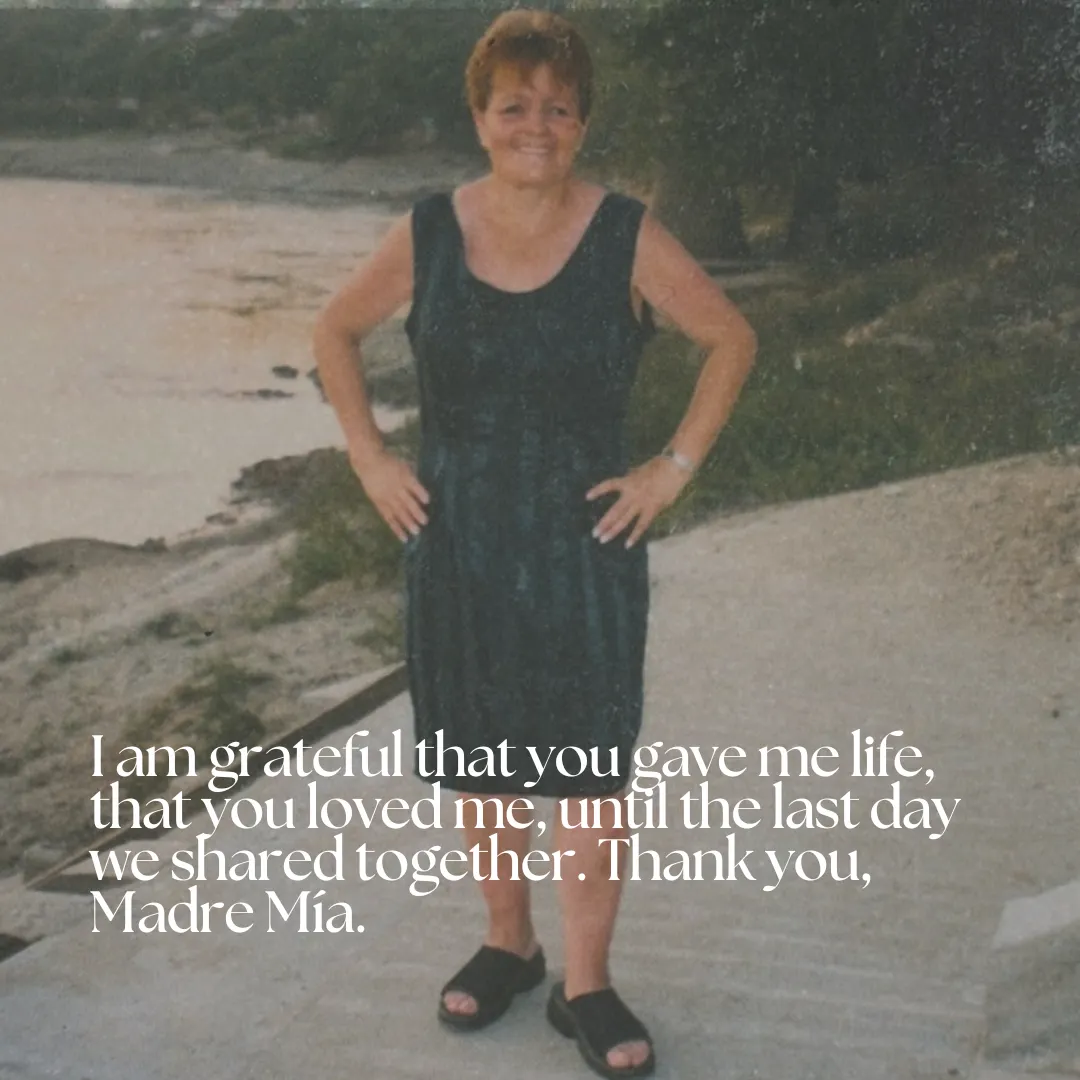
When you left, I kept calling home and only realized you weren’t there when I heard another voice answer the phone, which broke my heart until I finally stopped calling. I don’t know how long it took. Holy Week is sad because it reminds us of the years you haven’t been here.
Life goes on, and we have lots of things to do, things to take care of: studying, work, children, pets, friends, etc. We’ve been doing well, don’t worry. The four of us are still close, looking out for each other. As for the girls, they’re not so little anymore; they’ve grown into fantastic adults. Plus, you have more grandchildren — three more — who are beautiful people and fill us with joy. You would be very happy seeing them, spending time with them, and knowing about their lives.
When we talk about these topics, we sometimes think, “What would have happened if my mom were here?” When we reflect on each other’s life choices — no matter whether they match the ones we’ve made ourselves — someone always says things would have turned out differently. Ha, ha, ha, you know what they say, “Who knows?” Those questions have no answers.
We remember you with love and joy, we heal our hearts, understanding that your life was complex from childhood, but you gave all your energy and love so that today each of us is the person we are. You did well, you were a strong, resilient, loyal, joyful, hardworking, caring woman, warm to everyone. I especially understood, as an adult and mother, some of the decisions and actions that as a child seemed impossible and unfair to me.
I am grateful that you gave me life, that you loved me, until the last day we shared together. Thank you, Mother.
Love,
Marisol
Marisol Goyeneche is a writer from Colombia.
Dear Mama, Sis’ Anna Wami,
What does it even mean to navigate life without a mother? I’ll tell you one thing: it’s as disorienting as those major retailers that start advertising Valentine’s Day on the third day of the New Year.
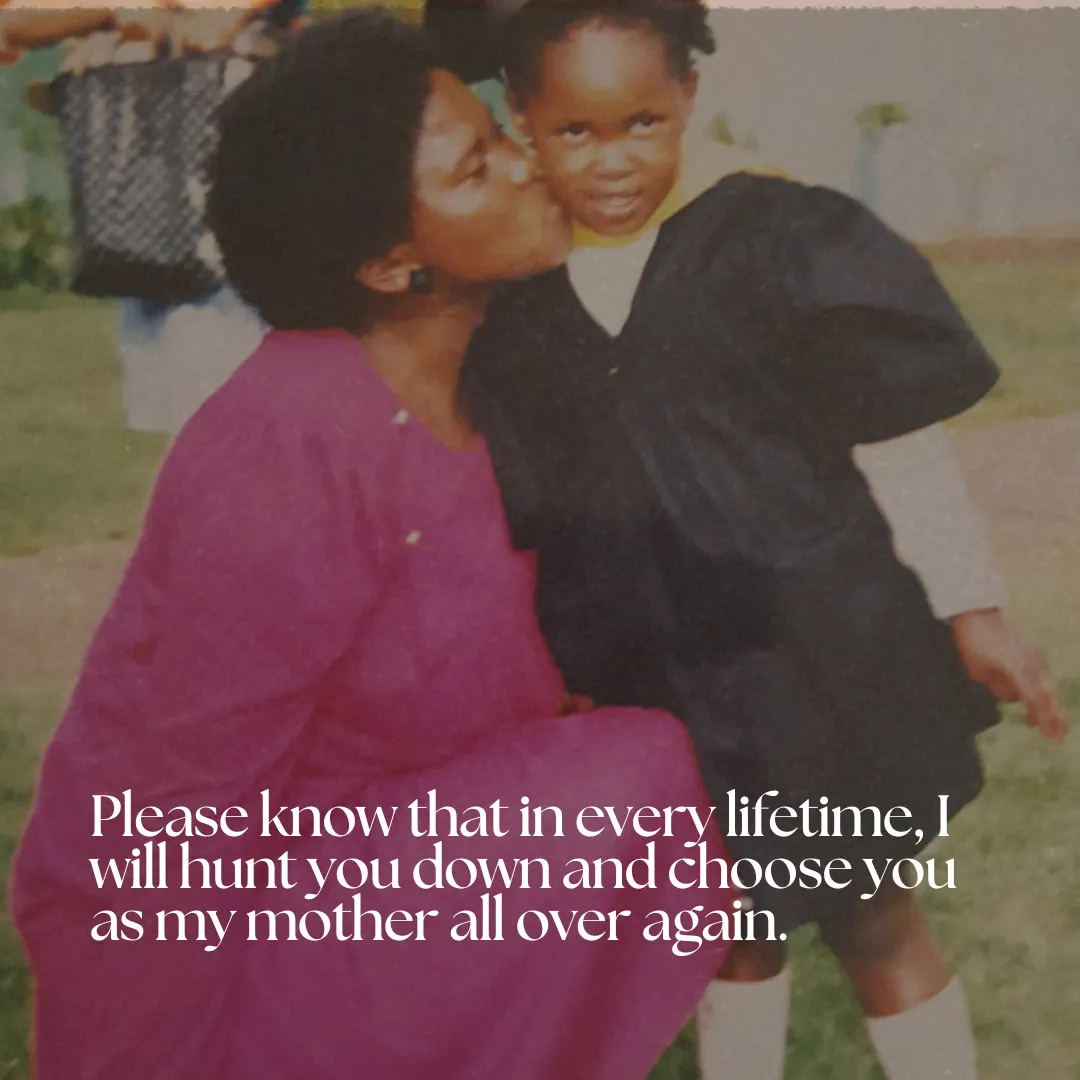
I’m writing to you today to tell you that I haven’t slept in the dark since you left two years ago. I don’t know if it’s the thought of you appearing in the shadows to reprimand me about my shenanigans — now that you have an aerial view of my life from heaven. Perhaps it’s my brain’s way of begging for a reprieve from the darkness I waded through during those eight days leading up to, and following, your passing. In those early days after we’d laid you to rest, a kitchen sink stacked with dishes meant grief had scrubbed the floor with me. Remembering to shower meant my negotiations with grief had gone fairly well. It’s not a stretch to say that only God knows how, and why, I’m still standing.
I can’t remember if I ever told you this, but I walked into 2024 with a serious bone to pick with God after reading Michelle Zauner’s 2021 memoir Crying in H Mart. Her heartbreak rose from the page and forced me to confront the idea of life without a mother. I did, for a split second. Then quickly pushed the intrusive thoughts away. Instead, I found myself entertaining a ludicrous idea — begging God to introduce a new rule that exempts mothers from dying. Little did I know that Crying in H Mart was preparing me for the greatest heartbreak of my life. The plot twist? You weren’t there to serve as my antiseptic balm, the same way you’d always nursed me back to my bubbly self after every major setback.
This Mother’s Day, my third without you, I want to thank you for preparing me — meticulously at that — for life without you. Without verbally giving me the scope to the unrelenting exam that is life, you nudged me in the direction of spirituality and talked me out of wanting to burn every bridge whenever I’d reach peak irritation. During one of my many sessions, back when I still couldn’t speak about you without tears and snot gathering at my Cupid’s bow, my therapist said: “For someone your age, you did overlean on your mother a bit.” At first, it felt like a jab. But with time, I realised that she must’ve not known the quiet luxury of having a mother who was also your best friend. She must’ve not known what it was like to call your mom, excitement dripping from your voice, to tell her that you’d met the hottest 52-year-old and have her respond with a non-judgmental: “Kemong ha le tshabe ho bonela batho ba baholo?” (Kemong, aren’t you scared of seeing grown folk like that?) The innocence of your comebacks and the ease with which humour rolled off your tongue still cracks me up. On the days I miss you most, I usually reach into the bank of your humorous one-liners stored in my head — and that usually holds me together for a little while. But make no mistake, your physical absence is still unbearable.
I used to shrug off your inappropriate jokes about death because I was convinced you’d make it to 90 and beyond. You definitely had it in you. But I also understand that somewhere between God’s timing, loneliness, and the fatigue of having fought more than your fair share of emotional battles and physical ailments, you were ready to rest. And knowing that you now get to be with your daughter Reitumetse, whom you only had the privilege of parenting for nine months before bronchitis snatched her from you, brings me so much comfort. I also constantly remind myself that there are children who lost their mothers far too young to even remember their faces. That thought usually pulls me back each time I feel myself slipping toward breaking point.
Thank you for teaching me the power of silence during those moments when I was hellbent on vindicating myself; for speaking our home language so purely, even after decades of living in Soweto, a township synonymous with blending languages to the point of being almost unrecognisable. In doing so, you gifted me the same fluency — so much so that people rarely believe me when I say that I was raised in Soweto and not our homestead, QwaQwa. Thank you for my beautiful name, an icebreaker that has carried me through many awkward small talks.
I do wish that you had warned me that your spirit would continue living in me, though. How else do I explain suddenly being a homebody? Or, finally mastering the art of picking my battles? Or, owning an electric blanket to recreate those winter nights in my mid-20s when I shared a bed with you? Or, finding joy in conversations with strangers? You had such a necessary gift of making people feel seen and convincing them that they mattered. Or, how pedantic I’ve become about hanging laundry neatly? These were your comfort habits, never mine [chuckles].
Thank you for forty years and ten months of days peppered with old school values. Your humour and strength held our imperfect family together, even during those moments when you were fighting the unimaginable in the background. Please know that in every lifetime, I will hunt you down and choose you as my mother all over again.
Only this time, I’ll answer your calls — even during the tightest deadlines. I’ll show up on time for our appointments. I’ll come home often for sleepovers. There won’t be any rushed visits, I promise. We’ll sit in the shade outside the kitchen door, perched on those uncomfortable cut-up tree trunks, peeling lepu — our favourite vegetable. I’ll file your taxes without you ever needing to nudge me about it. Lastly, I’ll prioritise rest — the one thing you wanted so badly for me, even on your deathbed.
Being mothered by you was the greatest privilege of my life. O tla dula o le lerato la pelo yaka, Sis’ Anna wami. You will always be the love of my life.
Love,
Kemong
Kemong Mopedi is a freelance writer/editor and communications specialist from South Africa.
Dear Mom,
It’s still hard to believe how much has changed since you died on December 23rd, 2005, and how much of you remains with us.
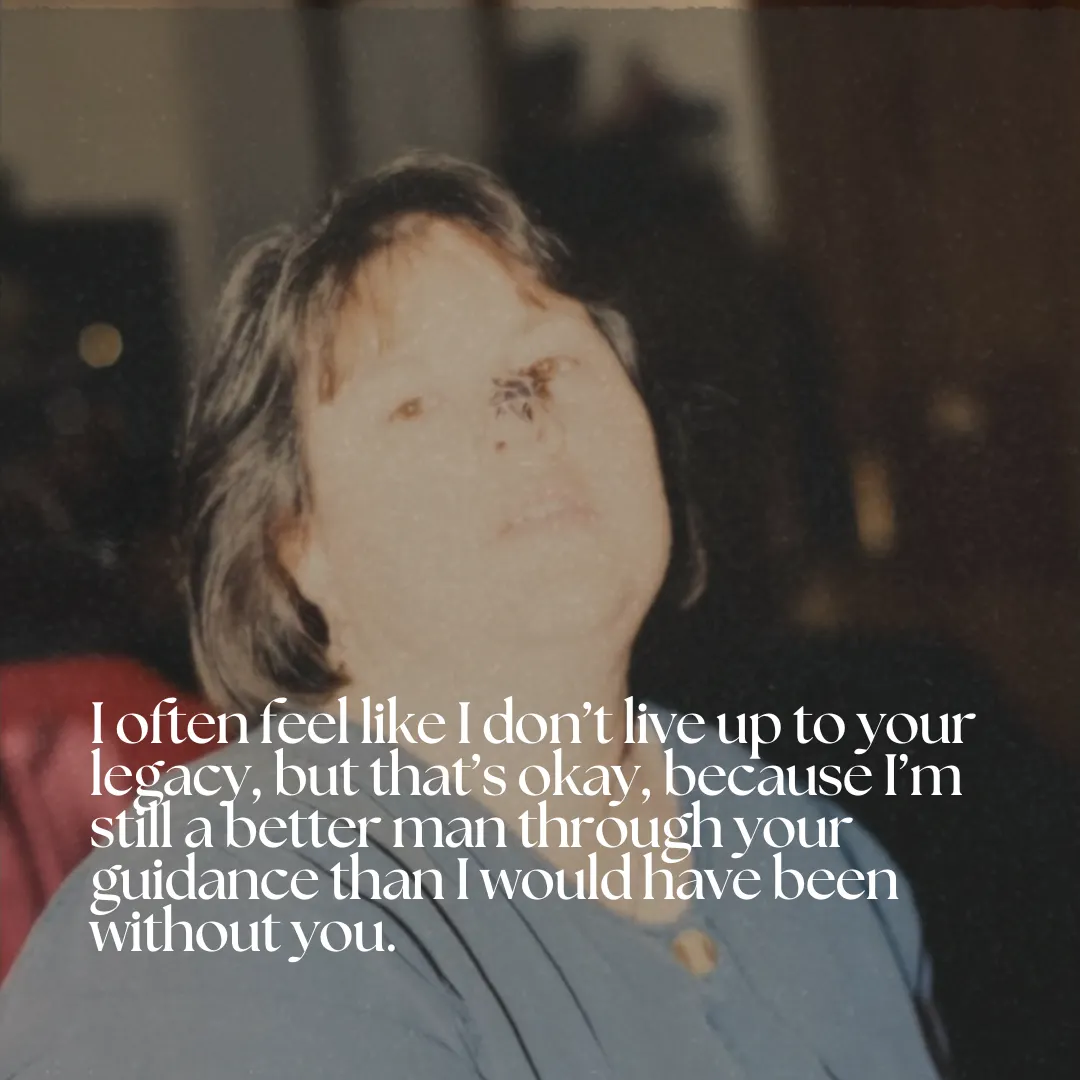
When you passed, after a yearlong battle with ovarian cancer, I was a senior in college, just one semester away from graduation. Brenton was still in high school.
1/8/13: Happy birthday, Mom! You’re still missed.
12/23/14: It’s been nine years, and not a day goes by that I don’t think of you. Thank you for everything you did to raise Brenton and me. Neither of us is perfect, but our values are yours.
1/8/16: Today, you would have been 58. It’s hard to believe that it’s been 10 years since the last time we saw your face, heard your laugh, or received your advice. There are still so many times I feel like I need you or want to talk to you, and then I remember that I can’t. I think about you at least twice every day, at 11:41. I miss late-night TV and our conversations. I am grateful for the values you taught me that have shaped who I’ve become. I hope I would’ve made you proud with the choices I’ve made.
One thing I know is that everything happens for a reason and all things work for the glory of God. While losing you hurts, I wouldn’t trade it for anything. Our loss created a new family, which I love dearly, and I only see good things coming from it. Thank you, Mom, for all you’ve done.
12/23/22: It’s been 17 years now since you’ve been gone, and you’re still missed. I wish you could see where your sons are now. I hope you’d be proud. We’ve grown and changed so much, but some things never change. I still miss our late-night conversations, your advice, your insight, and your support. I’m so thankful that you laid the groundwork for us to believe in ourselves, have faith in God, and meet people where they are, without judgment. I know I’m far from perfect, but you helped me see people as worth loving and helping instead of judging and shunning. I’m sure it’s why I’m in the field I’m in today, because I want to help people. They say time heals all wounds, but I still miss you, now more than ever. Thank you for everything you did for us with the time you had. I couldn’t have asked for a better Mom for me.
12/23/25: It’s hard to believe that 20 years have passed since we lost you. They say time heals all wounds, but we still have tender scars. Even now, there are moments when something exciting happens and my first thought is, “I have to tell Mom!” I miss our late-night talks, your wise advice, and especially how you modeled a love for others. You taught me the importance of meeting people where they are, especially difficult people, to think about what they may be going through and how we can support and encourage them, even if they’re strangers. I often feel like I don’t live up to that legacy, but that’s ok, because I’m still a better man through your guidance than I would have been without you.
I’m grateful for the way you lived your life for others and modeled that for us. Though your life was too short, you’re in a much better place than we could ever provide, and you served your purpose in this world. I wouldn’t change it, because even the loss has made me a better person, and God knows best, anyway.
Thank you, Mom, for your constant love and support, for pushing me to do my best, to love and encourage others, and to care for those in need or vulnerable. I miss you every day.
Love always,
Christopher
Christopher R. Colbert lives in Maryland, United States, and works for The Gideons International.
Dear Maa,
We have often quietly conversed in the past six years. This is my first letter to you since you crossed over in 2020.
You would have turned 95 this April. I have no doubt that if you were still around, your spirit would have been soaring, even if your body didn't keep pace with it.
Your ability to connect with one and all was legendary.
You always spoke your mind and never hesitated to tick people off. But your compassion for those in distress is still remembered.
Once, on a train journey in North India, you saw a street urchin shivering in the biting cold. You took off your woolen shawl and wrapped it around him. That was so you.
As children, my two brothers and I inherited your mortal fear of dead bodies. Fortunately, we outgrew it in our adult years. Just the sight of a funeral procession gave you nightmares. And yet, you were the first to reach out to friends, family and neighbours if they suffered bereavement. You would wake up with nightmares on those nights, but you never let your fear overtake your compassion.
You taught me a lesson I remember to this day: It was okay to skip attending celebrations, but one should always be there for people in their moments of grief.
Looking back, we had a troubled relationship when I was a petulant pre-teen, and you were a young, short-tempered mum. It is a blessing that we both evolved over the years and developed a deep bond of love, mutual respect, and implicit trust.
I can't pinpoint when our relationship changed. Perhaps it was when I realised, as a young adult in the early 1980s, that unlike in many families in India at the time, I enjoyed complete parity with my siblings and unflinching trust from both you and Papa. You shaped us into confident, responsible adults.
You took Papa's passing in 2009 stoically, deriving solace from a life lived to the full and having done your best by him in his sunset years. Five years later, when my younger brother, your son, passed away aged 46, it came as a body blow to you, I know. You braved that loss with rare fortitude.
When the sands were running out on our time together, you only wanted me to be by your bedside.
I smile now at the memory of how you would ask me to lie down beside you and hold you tight till you fell asleep. My mother, who must have shielded me from all my childhood fears, was seeking comfort in my embrace now. Life had come full circle.
The shadows were lengthening, and the last time I said goodbye to you turned out to be our final adieu.
Being your daughter, I took the news stoically, but in my heart of hearts, I grieved.
I grieved for the laughter, the quick wit, the joie de vivre that was gone forever.
I grieved for the loss of the house that was home only because you were there.
I grieved for my anchor.
I grieved in silence.
The grief was so personal that only I could understand it. It was just mine.
The festive times we shared, your birthdays, your ready jokes, your singing or just the sight of your sari, brought a barrage of tears shed in the privacy of my room.
It happened unexpectedly, sometimes in the middle of the night. Loved ones were supportive, but they could never completely know what you meant to me. It was a cross for me to bear.
Over the years, the edges of hurt have softened. Memories now cast a soft blanket around my heart. They bring an involuntary smile.
I have you to thank for that.
Love,
Mini
Mini Pant Zachariah is a writer from India.
Che ’M’e ’Nake,
Your grandkids don’t know you. A gaping void. You would have loved them — they are warm and funny. That has definitely passed down.
Hakere uena you died before the smartphone life, so they don’t get to hear your voice, experience your essence, how you embodied emotional safety and the ability to make others feel seen, seen, seen. I am sad that all the grandkids don’t get to have that. And to laugh deliciously with you, as we did. You had so much fun with us, dolling us up in matching clothes, and taking us everywhere with you! Town, the movies. I see now what you were trying to do. And it worked. Thank you for the magazines and the books. The page is a good friend.
I can still see your face now, smiling like a child, heart open wide. How loved you were! Your college friends called you Mokhachane, a play on the relentless pooch that told the story of how you first raised us, then went back to school. It always seemed you’d lived only for us, and I am increasingly happy that you got to live your life within a fun circle of friends in those last few years. I remember how devastated bo Aus’ ’Mametsing and Aus’ ’Mammusi were by your death.
The dreams where you were alive were cruel, crushing. In one, a few days after you died, you promised you had not died. Then I woke up.
I am still just as crushed at times. Quietly. Occasionally, I’ll be driving here — 8,246 miles from Thaha Street, Hillsview, where you last breathed — and I’ll suddenly realize that you are gone. It’s almost as if I just heard Nkhono ‘Matelang declare your death, commanding you, “don't do this.” It’s like another tearing from you, missing you in a place that also does not know you, a country not of our knowing.
I never expected anyone to take care of me. I was just determined to survive, to succeed — no fixation on any promises made, or on whether people were checking on me. I just shot through life, laser-focused on a future I subconsciously thought would heal my pain.
The thing is, one goes for a long time without realizing the tragedy of themselves. It took me years to understand myself as a motherless daughter searching for you. I see myself so clearly now. The breathless chasing. The indiscriminate loyalty. The hope that one of those devotions would feel like my mother.
When Nkhoampe’s time came seven years ago, so much of my children’s upbringing went to me grieving deeply. My husband, too, is woven into my grief (so strange that you don’t know him). Like many spouses, he was unsure what he was seeing before him, and what one does with that kind of thing — this ripped-up version of a wife. I simply did not place a burden on myself to be okay. I displayed my grief, not yet knowing I was also breaking the generational curse of the way I only ever saw you cry for Ntate before and during his burial, and how Nkhoampe, despite you being her only child, only cried that evening in the first bedroom.
I’d like to believe my children are more comfortable with grief, that they know how to witness others’ grief because they learned to witness mine. I know for sure that my husband has become more fluent in grief.
O ke ba kholoa, Nkhono surprised me with a tribute to you and Ntate in her final days, accusing you two of finding each other as extremely loving people, and leaving my sister and me with the burden of loving people too much. I’m learning to wield that love carefully in the joyful challenge of parenting and as a human being.
Joale feela le uena, let’s talk about how you left me with this intense curiosity about the human condition. Remember how you’d wake in the wee hours of the morning to watch the OJ Simpson trial on the black and white?
Thanks for ABBA. How grateful I am for the music, ’M’e. I got into a trance in that world — the world of Famo that Ntate left me (Issac Hayes did not stick), Lucky Dube oa Rangoane, Dolly Parton oa Akhali. In that world, you are all alive again.
I am living, ’M’e. I did things you would be proud of. With the privilege of outliving both of your ages at death, I find myself going back to the core: a kind of quiet joy of spirit, always the empathy, and yet now with attempts at authenticity and self-compassion, building on the me you molded with love and Bible scriptures. My grief, which I now understand as cumulative, also forced me to keep trying to build boundaries and service to my own heart.
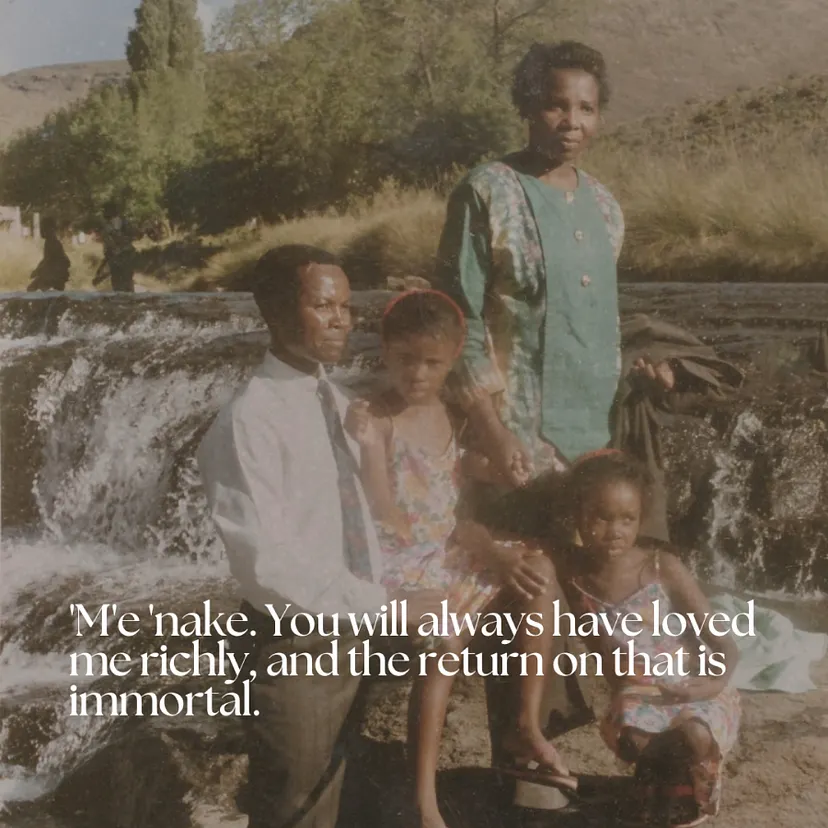
’M’e ’nake. You will always have loved me richly, and the returns on that are immortal.
Love,
Refana
Refiloe Letokoto is a writer living in the Washington Metro Area, United States.
Related News
Explore more stories from the blog archive 2026
